
EDUCATION PROGRAMME :
behavioural enrichment
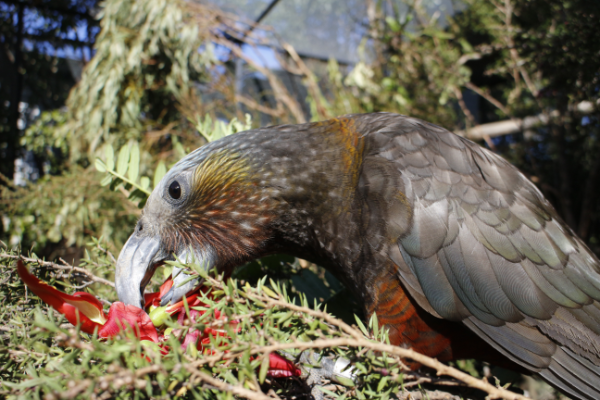
Ever wonder how we keep a cheeky Kea busy or a curious Capuchin engaged? Learn how our dedicated keepers at Natureland Zoo ensure every animal—from the smallest lizard to the most playful farm friend—continues to use their inquisitive mind and express natural behaviours.
Guided by our Educator, students will get a "behind-the-scenes" look at the science of animal well-being. They’ll have the exciting, hands-on opportunity to design and create interactive enrichment items for our residents!
From complex puzzles and scent trails to surprising new ways to play, students will explore the creative side of conservation. It’s more than just fun; it’s a deep dive into why mental stimulation is vital for the health and happiness of the wildlife we care for.
LEARNING OUTCOMES
Years 0-6
-Understand how behavioural enrichments suits animals’ specific adaptations
-Match behavioural enrichment items with the correct animal for their specific adaptation/ habitats
-Physically create behavioural enrichment items that will eventually be delivered to specific animal groups
Years 7-8
Same as above, with the addition of:
Understand the concept of behavioural stereotyping and its importance when caring for animals in a zoo setting.
CURRICULUM
Science – Living World
Ecology Level 1-2 –Recognize that living things are suited to their particular habitat
Ecology Level 3-4 - Explain how living things are suited to their particular habitat and how they respond to environmental changes, both natural and human-induced
Ecology Level 5 - Investigate the interdependence of living things (including humans) in an ecosystem.
Science – Nature of Science
Understanding about Science, Investigating in Science, Communicating in Science, Participating and Contributing.
Physical Education
Relationships with other people Level 1-2
Demonstrate respect through sharing and cooperation in groups
Identify and demonstrate ways of maintaining and enhancing relationships between individuals and within groups
Healthy Communities and environments Level 1-2
Take individual and collective action to contribute to environments that can be enjoyed by all
Contribute to and use simple guidelines and practices that promote physically and socially healthy classrooms, schools and local environments
Movement concepts and motor skills Level 4
Experience and demonstrate how science, technology, and the environment influence the selection and use of equipment in a variety of settings.
Education for Sustainability
Responsibility for Action, Sustainability, Interdependence, Biodiversity
What do we want for our young people? (New Zealand Curriculum, p8)
Be actively involved – participate in a range of life contexts, contribute to the well-being of New Zealand – socially, culturally, economically and environmentally.
This means Sustainability is a significant theme throughout the principles and values of the national curriculum in Aotearoa New Zealand and is important for a broad education. (New Zealand Curriculum, p16)
Session duration: Sessions with a facilitator will last for approx. 45 minutes. Outside this time, you are free to explore the Zoo. Most schools plan to arrive for 9:30am opening.
Costs:
Students- 9$ each
Teacher/parents- 13$ each
Free Teacher/parent within ratios:
Early Learning Centers are allowed 1 complimentary adult pass per 4 children
Primary and Highschool groups are allowed 4 complimentary adult passes.
All other groups 1 complimentary adult pass per group