
EDUCATION PROGRAMME :
ENDANGERED SPECIES
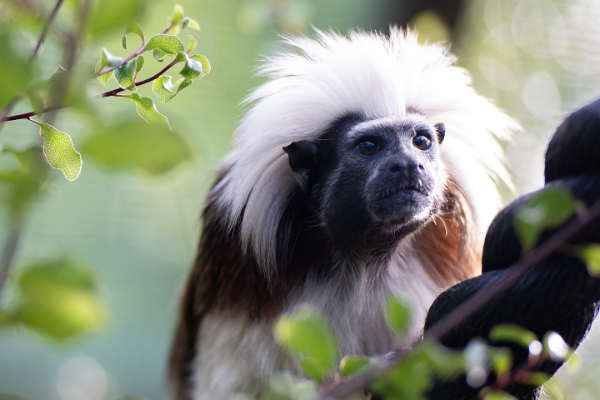
At Natureland Zoo, we believe that connecting with animals is the heart of conservation. Our mission is to build a future for wildlife through active science—from our local Breed for Release mahi to our role as a sanctuary for international treasures.
Guided by our educator, students will discover the real-world stories of species on the brink. We’ll explore the main threats to endangered animals—both in our Nelson-Tasman backyard and across the globe—while celebrating the "conservation optimism" that drives our work.
LEARNING OUTCOMES
Year 5-8
Identify contributing factors in wildlife extinction and endangerment
Identify personal actions that can help reduce threats and protect endangered species.
Recognise one conservation project Natureland Zoo participates in which helps animals to thrive in their wild habitat
Years 9-13
Identify examples of endangered species and current threats to biodiversity
State some of the ways Natureland Zoo contributes to the conservation of endangered species, e.g. advocacy, breeding programmes, conservation fieldwork and research
CURRICULUM
This session compliments:
Biology 90926 (1.2) – report on a biological issue
Biology 91154 (2.2) – analyse the biological validity of information presented to the public
Biology 91602 (3.2) – integrate biological knowledge to develop an informed response to a socio-scientific issue
Geography 91013 (1.7) – describe aspects of a geographic topic at a global scale
Social Studies 91283 (2.5) – describe a social action that enables communities and/or nations to meet responsibilities and exercise rights
Social Studies 91600 (3.5) – examine a campaign of social action(s) to influence policy change(s)
Media Studies 90996 (1.8) – write media texts for a specific target audience
Media Studies 91255 (2.8) – write developed media text for a specific target audience
Science – Living World
Ecology Level 3-4 - Explain how living things are suited to their particular habitat and how they respond to environmental changes, both natural and human-induced
Ecology L5: Investigate the interdependence of living things (including humans) in an ecosystem.
Nature of Science: Understanding about Science, Investigating in Science, Communicating in Science, Participating and Contributing.
Science – Living World
L3: Understand how people view and use places differently.
L3: Understand how people make decisions about access to and use of resources.
L4: Understand how exploration and innovation create opportunities and challenges for people, places and environments.
L5: Understand how people’s management of resources impacts on environmental and social sustainability.
Education for Sustainability
Responsibility for Action, Sustainability, Interdependence, Biodiversity
Year 9 & 10
Science - Living World
Ecology: investigate the interdependence of living things (including humans) in an ecosystem
Ecology: explain how living things respond to environmental changes, both natural and human induced
Nature of Science: communicating in science, participating and contributing
Education for Sustainability: Concepts - responsibility for action, sustainability, interdependence, biodiversity, equity
Year 11
Science – Living World
Ecology: investigate the impact of natural events and human actions on a New Zealand ecosystem
Biology 90926 (1.2) – report on a biological issue
Nature of Science: develop an understanding of a socio-scientific issues by gathering relevant scientific information in order to draw evidence-based conclusions and take action where appropriate
Education for Sustainability: Concepts - responsibility for action, sustainability, interdependence, biodiversity, equity
Geography
Understand that natural and cultural environments have particular characteristics and how environments are shaped by processes that create spatial patterns
Geography 91013 (1.7) – describe aspects of a geographic topic at a global scale
Year 12
Science – Living World
Participating & Contributing:use relevant information to develop a coherent understanding of socio-scientific issues that concern them, to identify possible responses at both personal and societal levels
Biology 91154 (2.2) – analyse the biological validity of information presented to the public
Education for Sustainability: Concepts - responsibility for action, sustainability, interdependence, biodiversity, equity
Social Studies:
Understand how communities and nations meet their responsibilities and exercise their rights in local, national and global contexts
Social Studies 91283 (2.5) – describe a social action that enables communities and/or nations to meet responsibilities and exercise rights
Year 13
Science – Living World
Nature of Science: participating & contributing
Biology 91602 (3.2) – integrate biological knowledge to develop an informed response to a socio-scientific issue
Education for Sustainability
Evaluate social, economic and technological measures that can be taken to sustain natural resources and improve biodiversity now and for the future
91735 (3.2) – evaluate measures that may be taken to sustain and/or improve a biophysical environment
Social Studies
Understand how policy changes are influenced by and impact on the rights, roles and responsibilities of individuals and communities
Social Studies 91600 (3.5) – examine a campaign of social action(s) to influence policy change(s)
Session duration: Sessions with a facilitator will last for approx. 45 minutes. Outside this time, you are free to explore the Zoo. Most schools plan to arrive for 9:30am opening.
Costs:
Students- 9$ each
Teacher/parents- 13$ each
Free Teacher/parent within ratios:
Early Learning Centers are allowed 1 complimentary adult pass per 4 children
Primary and Highschool groups are allowed 4 complimentary adult passes.
All other groups 1 complimentary adult pass per group